[ the campaign trail ]
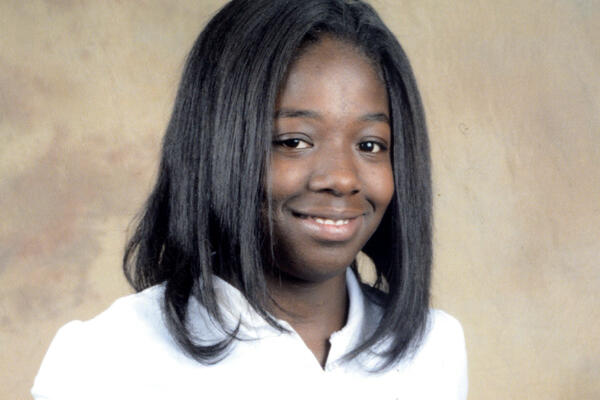
The names on the fliers — candidates for state office like upstart Fatimah Muhammad and anointed Philly insider Jordan Harris — may look and sound like homegrown legislative hopefuls. But follow the money and a different picture emerges: that of a statewide campaign, funded by wealthy donors, to stack the Pennsylvania primary battles on April 24 in favor of those supporting school vouchers, which allocate taxpayer funds for private and religious school tuition. The pro-voucher political action committee (PAC) Students First — funded by Pennsylvania hedge-fund managers and American Federation for Children, a Washington, D.C., pro-voucher group headed by Amway heiress and major right-wing donor Betsy DeVos — emerged on the state's political scene with a bang for the 2010 elections. And they are back to spend big in 2012.
"I see a move by essentially a handful of very wealthy people who want to privatize public education for a wide variety of reasons," says Lawrence Feinberg, co-chairman of the anti-voucher Keystone State Education Coalition. "Not the least of which has to do with crushing labor unions, but they also want tax dollars going to private and religious schools."
As City Paper first reported online two weeks ago, homes in West Philadelphia's 188th House District have been sent glossy mailers attacking state Rep. James Roebuck, the ranking Democrat on the House Education Committee and a leading opponent of vouchers.
"James Roebuck blocked kids from attending the schools of their choice," is printed in red letters on the first mailer, above an unflattering photo of Roebuck. The mailer blames him for the enrollment cap at the prestigious University of Pennsylvania-supported Penn Alexander public school. The second mailer is unquestionably misleading, blaming Roebuck for former Superintendent Arlene Ackerman's ruinous tenure, dropout rates, cheating, crowded classrooms and school violence. The word "vouchers" does not appear.
"I don't support vouchers. I do support school choice," says Roebuck. "What we need to do is open up more options for students within the existing public school system so we don't divert money out of the system to the benefit of some kids and not the many."
The mailer was funded by a third-party group called Public Education Excellence, which has not yet filed a finance report with the state. According to a Daily News article, the PAC's founder said she "believed" it had received funding from Students First and American Federation for Children (AFC). AFC, in turn, has contributed $2.42 million to Students First since 2011 — including $1 million reported so far in 2012.
Students First has also given $25,000 to Roebuck's challenger, Muhammad. It is impossible to tell how much the various interrelated pro-voucher PACs have spent, since many campaign-finance disclosures have yet to be filed.
Muhammad initially said her campaign had the support of powerful state Sen. Anthony Williams, the state's most high-profile pro-voucher Democrat. Williams, though, says he has not endorsed her candidacy. "I think it was an error that I made in some of my giddiness about running," Muhammad told CP finally. "When people say, 'I respect your decision to run,' I took that as support."
But there are deep ties between Muhammad's campaign and Williams' political circle. And Roebuck contends Williams is targeting him for his role in blocking legislation to create a voucher program, a top priority of Republican Gov. Tom Corbett. The bill passed the Senate last year but has so far failed to make headway in the House.
"I've got loads of money from a number of the groups coming in on top of me," says Roebuck. He says Williams' "fingerprints are very much in evidence." Williams says he had not seen the mailings, but that "if someone wrote about blaming him for not having enough options ... you have to take responsibility for not creating more options."
Wealthy pro-voucher groups made their first foray into Pennsylvania politics in the 2010 election, when Williams' quixotic gubernatorial campaign received over $5 million from Students First, backed by conservative Bala Cynwyd hedge-fund managers Jeffrey Yass, Arthur Dantchik and Joel Greenberg. After Williams lost, victorious Democratic nominee Dan Onorato — with Williams' endorsement — declared his support for vouchers and asked Williams' backers for donations.
For his part, Roebuck says he has the support of Williams' archrival, Philadelphia Councilwoman Jannie Blackwell, along with Mayor Michael Nutter, state Sen. Vincent Hughes, all four district ward leaders and the entire Philadelphia state House delegation. But Roebuck's campaign has been lackluster, and his supporters are worried.
Locally, recipients of Students First largesse include Rep. Vanessa Lowery Brown, a Williams ally who received $10,000. Rep. Ronald Waters, who was elected to Williams' vacated House seat in 1999, also received $10,000. Jordan Harris, the Williams-endorsed candidate running in a special election in South Philadelphia's 186th District, has received $20,000 from Students First.
The pro-voucher campaign is statewide. State Sen. Pat Vance, a moderate Republican from Cumberland County, has also been targeted for opposing vouchers, slammed with attack ads by pro-voucher Citizens Alliance of Pennsylvania PAC, a major recipient of Students First funding.
A 2011 review of voucher research by the nonpartisan Center on Education Policy found that "inner-city poor students attending private schools with vouchers in general show no greater gains in academic achievement than ... in public schools," though "much of the research over the last 10 years has been conducted by pro-voucher organizations."
The pro-voucher movement's political efforts, however, have been more fruitful. Conservatives taking regular political beatings for cutting funding to public schools can campaign to empower poor people, thereby shifting the debate to more comfortable ground. Corbett, who last year cut education funding by $1 billion, laments that poor students are "consigned to failure because of their zip codes." He offers school choice as the cure.
Williams leads a small but influential group of black Philly Democrats who support vouchers. "It's no longer a partisan right-wing conversation," Williams tells CP. "It's a conversation about what do you do about failing schools."
But Philadelphia public school advocates warn that vouchers could be the knockout blow for a district in deep financial crisis. Last year, the state cut nearly $300 million in funding to the district, contributing to a partially self-inflicted $629 million shortfall. A shortfall of $186 million is projected for 2012-13.
Yet the attack on Roebuck mirrors pro-voucher campaigns nationwide bankrolled by a small set of right-wing businesspeople, Wall Street bankers and religious conservatives. In New Jersey, two hedge-fund managers created an organization called Better Education for Kids to support like-minded candidates. The commitment appears to be ideological. But it is also economic: Investors work closely with PACs with an eye toward the growing market in for-profit education. Investment banker Michael Moe, according to an investigation in The Nation, "leads an investment group that specializes in raising money for businesses looking to tap into more than $1 trillion in taxpayer money spent annually on primary education."
Moe also sits on the board of the Center for Education Reform (CER), which last year spent $70,000 on ads in Pennsylvania comparing voucher opponents to segregationist former Alabama Gov. George Wallace. CER president Jeanne Allen served as an education adviser to Corbett.
Students First contributed hundreds of thousands of dollars to Corbett and other candidates in 2010 and 2011. But where most of that support is headed this year is unclear, since the majority of the $590,682 so far on record — $350,000 — went to the Citizens Alliance of Pennsylvania PAC, which has yet to file a report.
Hedge-fund dollars notwithstanding, polls show that most Pennsylvanians oppose school vouchers. But in West Philadelphia, pro-voucher money has fueled an increasingly heated — and nasty — race. On March 19, a team of Muhammad supporters attended a 27th Ward candidates' forum. Muhammad did not show. Instead, she released a letter accusing ward leader Carol Jenkins of "attempting to stage a one-sided, 'gotcha' event." Muhammad supporters showed up, though, and the meeting, as the University City Review put it, "turned into a verbal melee."
Jenkins said she was perplexed because Barbara Chavous, who works on Muhammad's campaign, had accepted the invitation. Though Muhammad and Chavous both disputed that, Jenkins played CP a voicemail of Chavous clearly saying, "Yes, she will be there."
"All I can tell you is, I don't recall the message," Chavous told CP.
Still, Muhammad's campaign seems concerned about how voters will react to the negative campaigning. After CP published its initial report, a polling firm called residents to ask what they thought about recent media coverage of the race.
But Muhammad's connections and financing may provide her just the head start she needs. After all, while Williams hasn't endorsed her, his camp dominates her campaign: Barbara Chavous was the longtime girlfriend of late state Sen. Hardy Williams, Anthony Williams' father. Barbara's daughter, Dawn, was also at the meeting. She married City Councilman Kenyatta Johnson in December — and both used to work for Sen. Anthony Williams. Dawn ran his 2010 gubernatorial campaign. The two were introduced by Hardy Williams.Oh, and Dawn is executive director of Students First, according to an article about their wedding in the Philadelphia Tribune.